
POS charges, wallets and cash: keeping sales records straight
When customers pay by POS, transfer, mobile wallet and cash, your sales end up in four places. Here's how to keep one true sales figure, and why it matters for VAT and income tax.
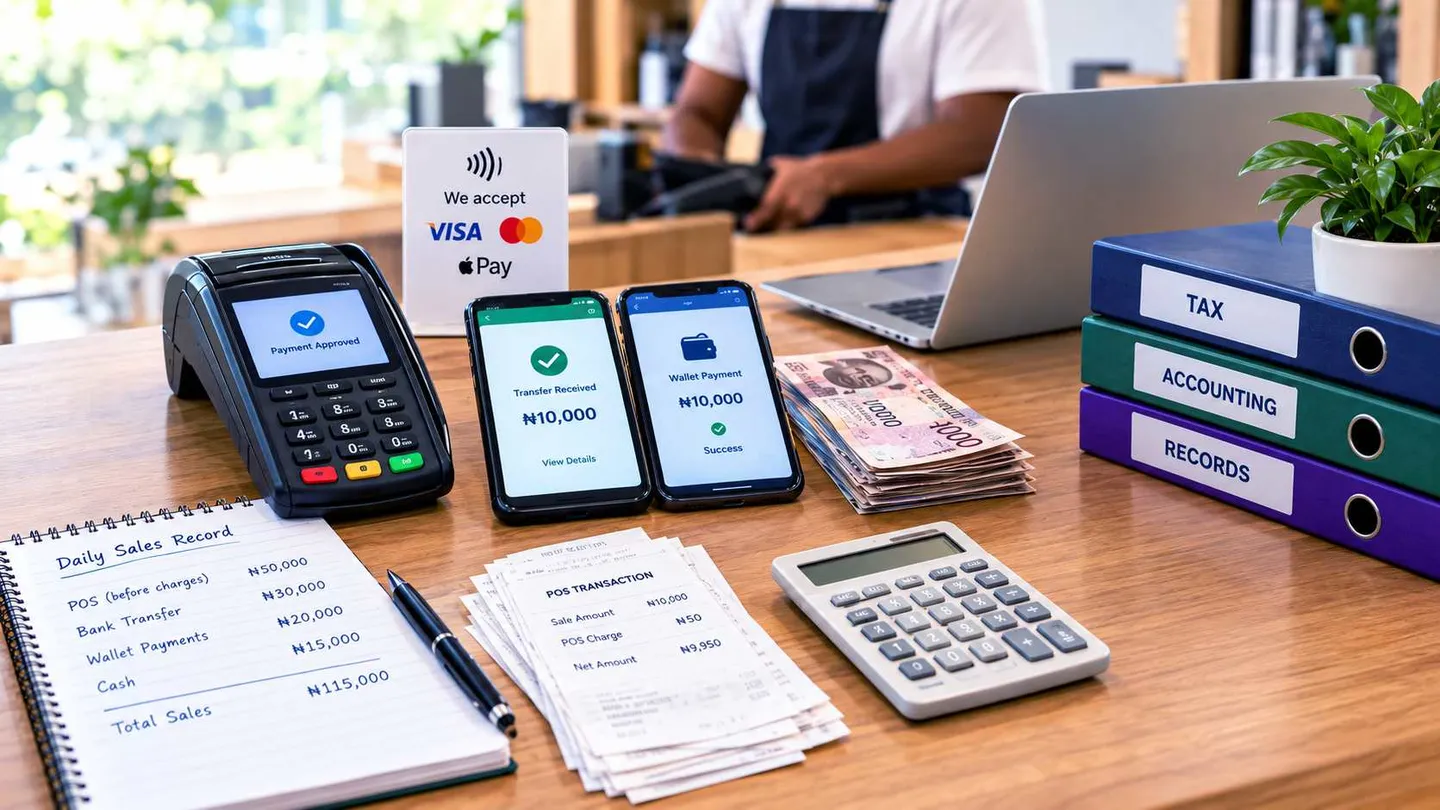
Most small businesses now take money in at least four ways: card payments through a POS terminal, bank transfers, mobile wallets and cash. Each lands somewhere different, with different charges taken off. If your sales records only show what reached the bank, they'll be wrong, and a tax auditor will notice.
Record sales before charges
A ₦10,000 sale paid by POS might reach your account as ₦9,950 after the charge. Your sales are ₦10,000; the ₦50 is an expense (a bank or POS charge). Recording only the ₦9,950 understates sales, and if you're registered for VAT, your VAT return won't match your books.
Bring every channel into one figure
At the end of each day or week, add up:
POS settlements, from your terminal provider's report, before chargesBank transfers receivedWallet payments, from each wallet's statementCash taken, from your till or sales book
That total is your sales for the period. Keep the reports and statements that support each part.
Cash needs the most care
Cash leaves no automatic record. Write every cash sale in a sales book or till record on the day, and bank cash regularly. Large, irregular cash deposits with no sales records behind them are a common audit query.
Why it matters
Your monthly sales drive your VAT returns (if you're registered) and your income tax. When the sales in your returns, your books and your bank statements all agree, there's very little for an auditor to ask.
How TaxAudit helps
Monthly records lets you enter each month's sales and expenses by category and attach the proof. The pre-audit check compares the sales in your VAT returns with your books and shows any difference before an auditor does.
- Record sales at the full amount; POS and transfer charges are expenses
- Add POS, transfers, wallets and cash into one sales figure each period
- Write down every cash sale on the day and bank cash regularly
- Sales in your returns, books and bank should agree
This article is general information, not tax advice.
This article explains the law as at 12 October 2026. It's general guidance, not professional tax advice. Rates and thresholds should be confirmed for your situation.